
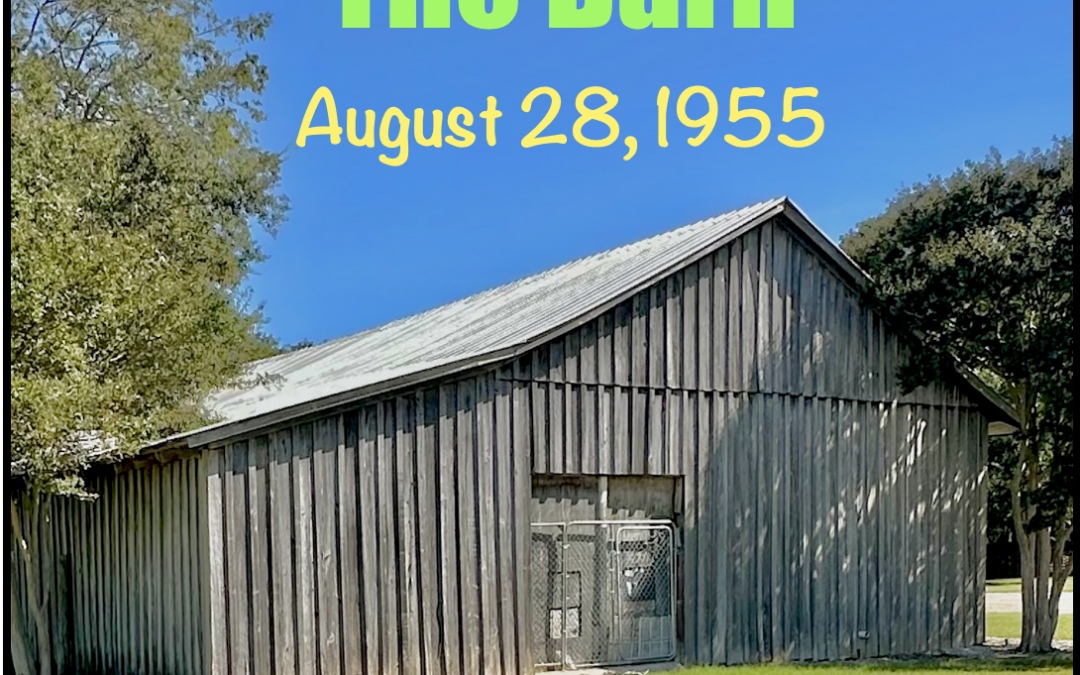
This post is my effort to honor Black History Month in my own way. Since I couldn’t pull it off in February, here we are in April. And that’s OK because Black History spans more than one month a year, right? And it’s going to take me more than one post to share what I am learning in the seventh decade of my very white life. For whatever it’s worth, this is the first of a series of three I am doing on the story of Emmett Till and why knowing more about this incident in African American history matters so much. This summer we drove the EV as far as Montgomery, Alabama to travel part of the Civil Rights trail. It was a trip we wanted to take for awhile, partly prompted by my re-reading of the family history just a few years ago. I had discovered words my white eyes must’ve skipped over many times since my Grandfather Clarence wrote the history of our Donation Land Claim when I was in junior high school. The entry I hadn’t seen said my Oregon Trail grandparents got slaves as wedding gifts. I don’t remember ever knowing. For our journey, we wanted to be in Greenwood, Mississippi, August 28. It was the 70th Anniversary Commemoration of the lynching of Emmett Till in a barn in Sunflower County. There were three days of events. We needed to know more truth. Let’s just start with the blinding flash of the obvious for our learning: the story of Emmett Till is the story of America.
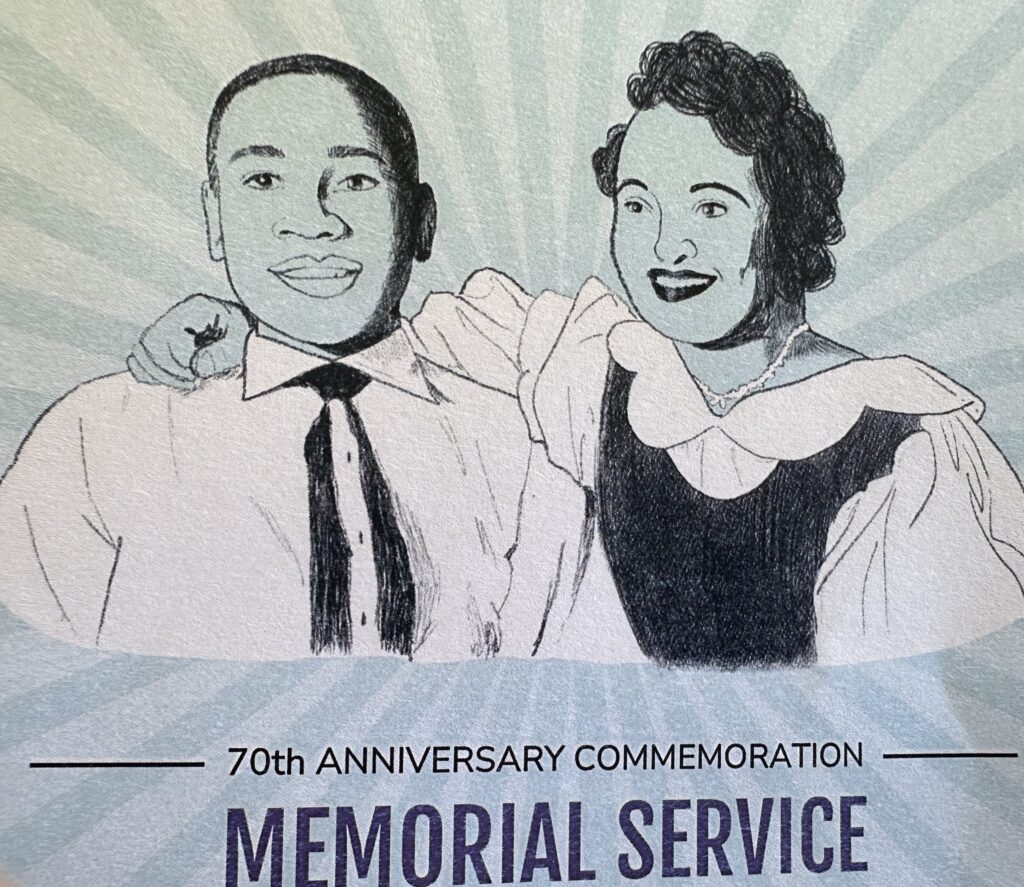
In 1955, Emmett Till was a 14-yr-old, living with his Mother in Chicago. Their families had settled there from what we like to call “The Great Migration,” where millions of blacks escaped the violence of the Jim Crow Delta. Emmett begged his Mother (Mamie) to let him take the train with cousin Wheeler Parker Jr. to visit his Aunt and Uncle, Moses and Elizabeth Wright, in East Money Mississippi. It would be a late summer adventure before school started in the fall. Living deep in the Mississippi Delta, the Wrights scraped a living from the red earth, sharecropping a few acres of cotton among the huge Plantations. His mother was terrified to let Emmett go. She finally agreed, but drilled her son over and over again on the rules of Black survival in the South. At the commemoration, students from Jackson State U. staged a performance of Take Me Back: A Journey of Unsettling Memories. They acted out this conversation between young Emmett Till and his Mother Mamie Till.
“Don’t make eye contact with a white person. Say ‘Yes Ma’am, No Ma’am, Yessir, No-sir.’ If you see a white woman walking toward you? Step off the sidewalk! Get down on your knees if you have to.” “Oh Mama it can’t be that bad,” Emmett was heard to say. “No Bobo,” (that’s what everyone called him), “It’s worse than that!” she said. (p227) She made Uncle Mose swear he wouldn’t let them drive to the store in Money during their visit. Wheeler (16 yrs) and Emmett (14) enjoyed the late summer days, picking cotton, hanging with cousins, eating their Auntie’s home cooking. But mid-week the teens couldn’t help themselves. After a day in the field, they all piled in the old pick-up in early evening. They did drive into Money, to Bryant’s Grocery & Meat Market. Carolyn Bryant (21 yrs.) was tending the store that evening while her husband Roy was away on business. False narratives, even sworn at trial, say Emmett entered the store, eventually grabbing Bryant around the waist. He was rumored to have said, “I’ve been with lots of white women before.” In truth, he bought gum, laid his money on the counter so as not to touch a white woman by putting the coins in her hand. He left the store to sit with the cousins playing checkers on the front patio.
But what happened next set the world spinning. Brown v. Board had just come down from the High Court the spring before, mandating the de-segregation of public schools. The Jim Crow south, still highly vested in the Lost Cause of the Confederacy were damned if they’d let n—r boys go to school with their white girls and allow n—r men to do to their white women what white men had been doing to black women since 1619. Brown v Board became law the spring of 1954 and by fall that year 95% of white students in public schools in the Delta had quit those schools, enrolling in the white christian “Academies” that sprung up over night across the Delta. That afternoon at the store, Carolyn Bryant walked out front to get something out of her car and Emmett gave a wolf whistle. The terrified cousins knew exactly what that meant. In a panic, they grabbed Emmett, piled in the truck and fled home. That’s what happened as nearly as we can know. (p324)
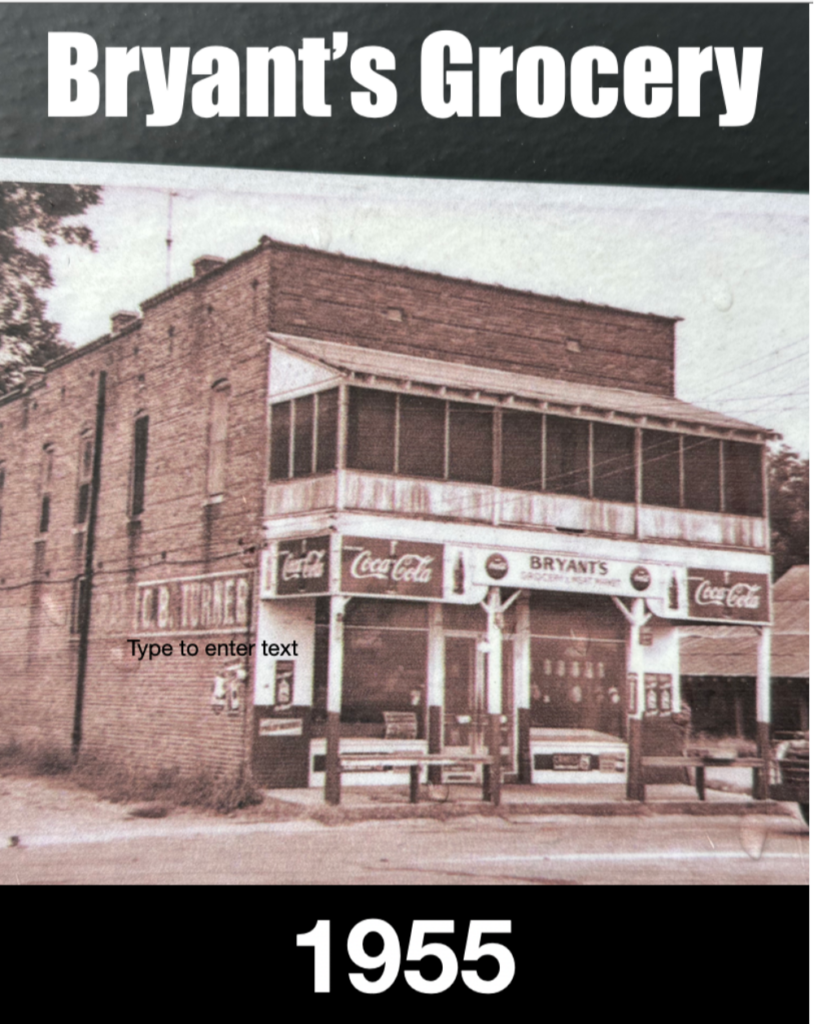
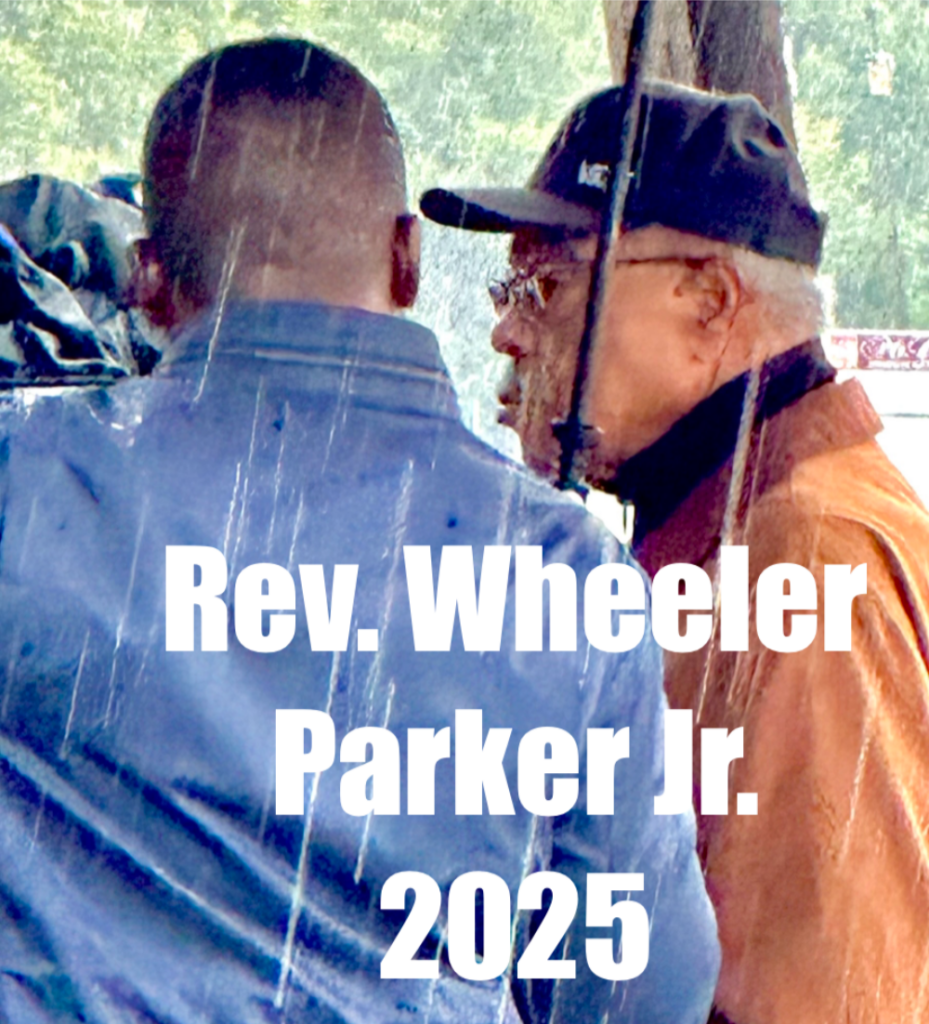
We arrived in Greenwood, Mississippi August 27. We wanted to be in all the places. So we started 3 miles down the road, in Money at Bryant’s Grocery & Meat Market. The remnant stands overgrown with vines. A film crew was setting up. Before we knew it, Wheeler Parker Jr. stood right in front of us. Tall and strong at 86 yrs, Wheeler is the only surviving witness. He says the early morning of Sunday, August 28, 1955 was “dark as a thousand midnights.” Carolyn Bryant’s husband Roy Bryant and half brother JW Milam banged on Wright’s door at 2 AM, looking for “that boy who did the talking down at Money.” Milam frightened Wheeler Parker awake, waving a flashlight and pistol in his groggy face. Emmett was sleeping in the next room with cousin Simeon. They abducted him and disappeared into the blackness.
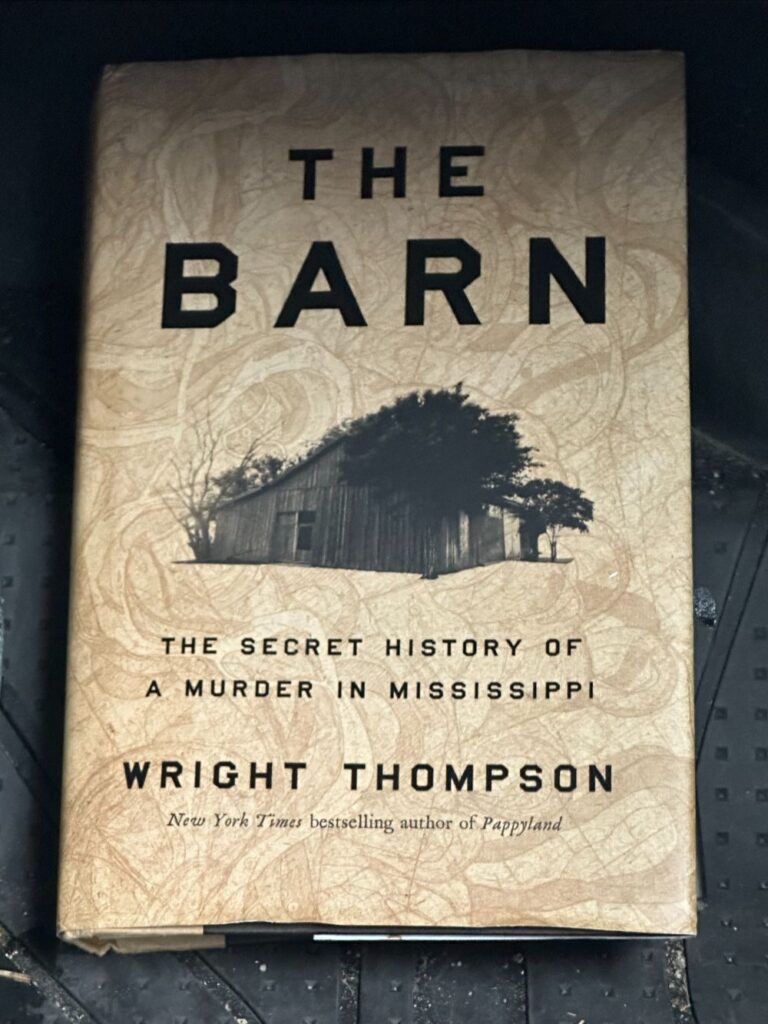

All the way from Oregon to the Mississippi Delta, Debbie drove and I read aloud the 400 pages of the most accurate rendering of the Emmett Till story written so far. Titled The Barn: The Secret History of A Murder In Mississippi, it was written by Wright Thompson, who grew up in the same Delta places about which he writes. It is recent research, released in 2024. Everything I have written in this post, is just my way of re-telling Wright’s chronicled work, so we can pass it on in our own words. I have furnished some page numbers where references are specific.
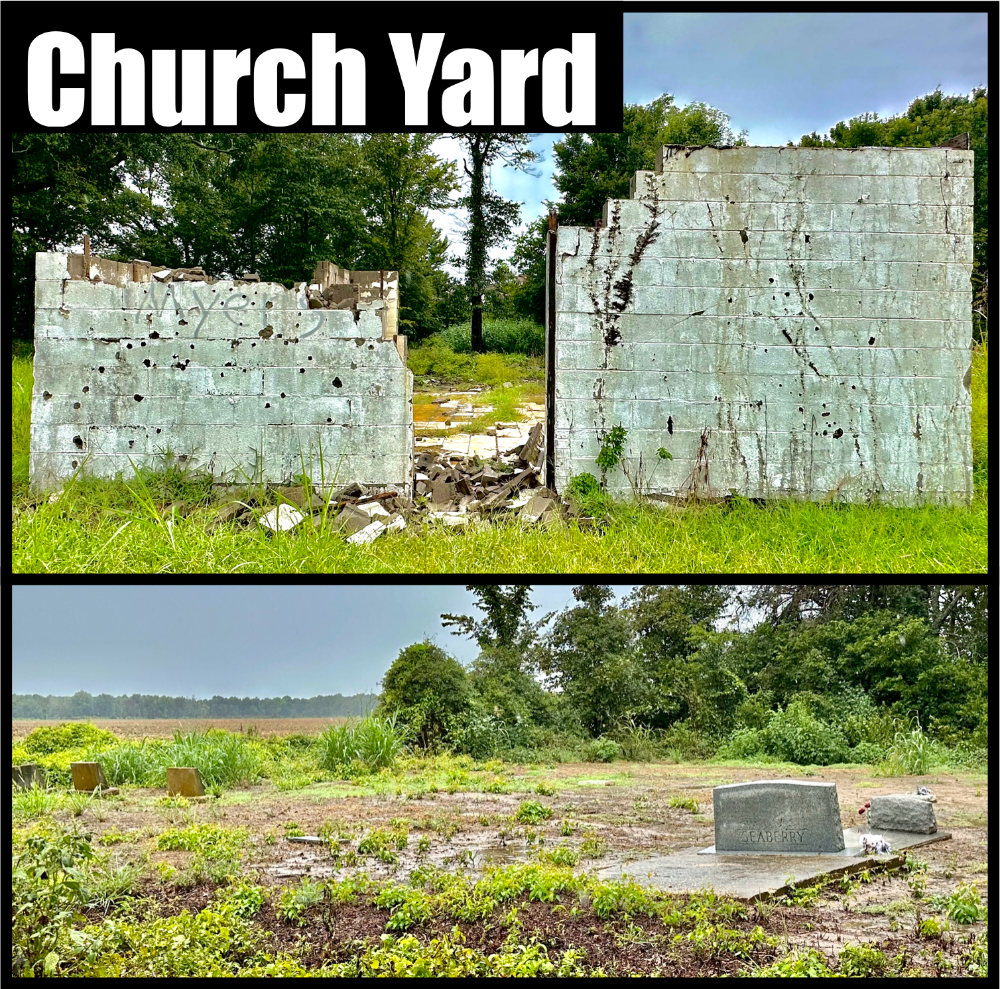
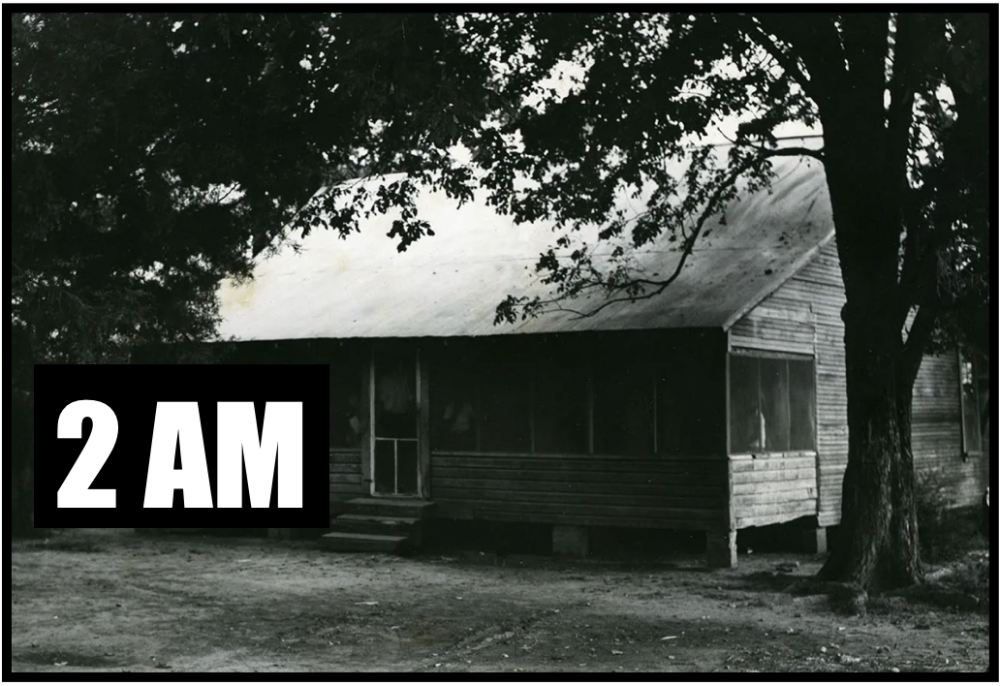
We left the grocery site. Driving to East Money, we found the Mose Wright property where Emmett was sleeping that night with a house full of cousins. The home is long gone but a few old dark photos remain. Nearby, what’s left of the East Money Church of God in Christ keeps watch on the place where Emmett’s body was almost laid in the church yard to inter the truth. We found JW Milan’s cotton gin where they picked up a fan motor. We walked to the bridge where they threw a young Chicago boy into Black Bayou, the fan motor wrapped to his body with barbed wire. We drove the Tallahatchie River to Graball Landing where 2 fishermen found Till’s mangled corpse 3 days later. We traveled some of the haunted backroads where, from 2 to 6 AM, a horrified 14-yr-old was hauled around in the back of a pickup across Tallahatchie and Sunflower counties.
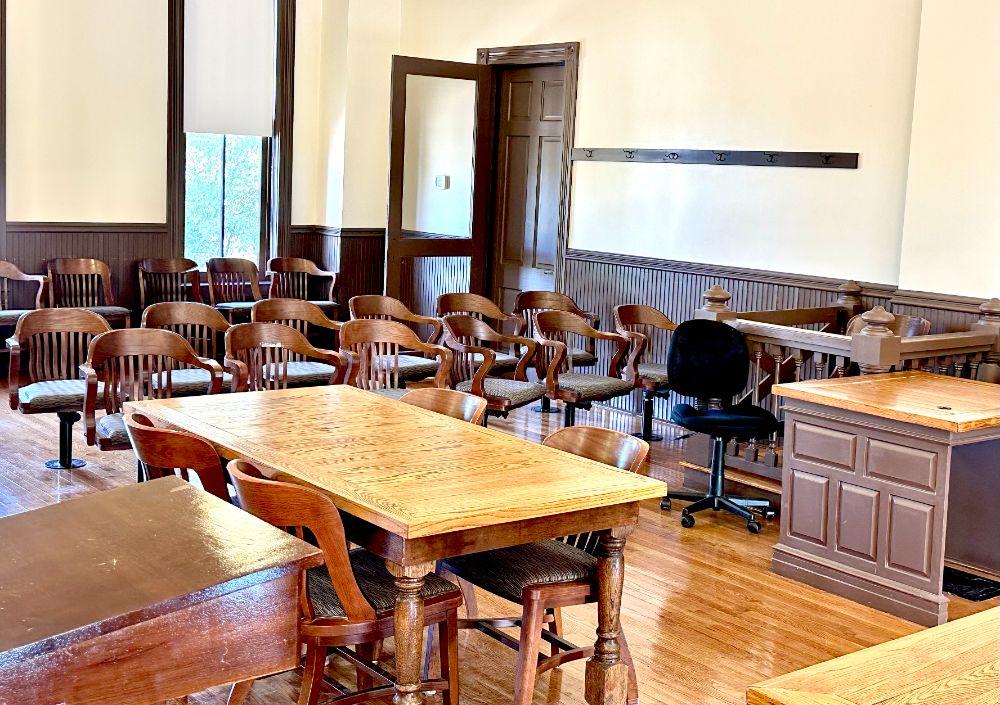

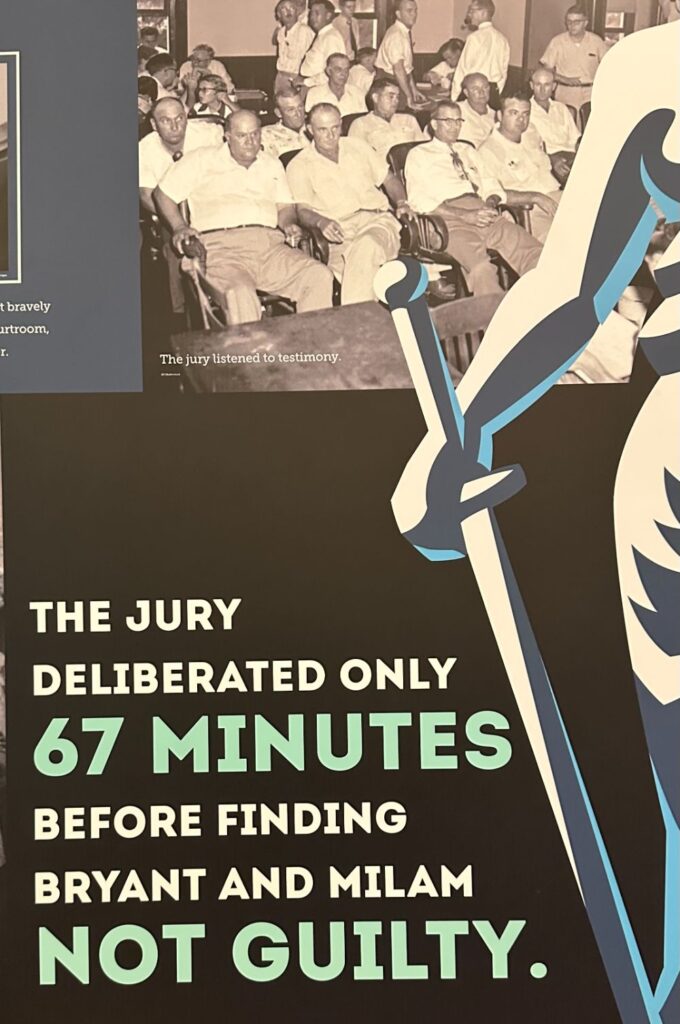
And we found the courthouse in Sumner. 3 weeks after his death, a jury of white men took 67 minutes to acquit. (p300) They said it wouldn’t have taken so long, but they had to break for sodas. The room has been restored to what it was in 1955, with jury seats and the witness stand where Moses Wright stood to point at Bryant and Milan identifying them as the abductors, where Willie Reed, who heard Emmett’s cries from a Barn in Sunflower Co. testified he saw Milam there carrying a pistol. Moses Wright and Willie Reed both escaped with their lives to Chicago. Willie walked 6 miles in the Delta darkness to where Medgar Evers picked him up and got him to the airport and on a plane flying north. He changed his name and vanished.
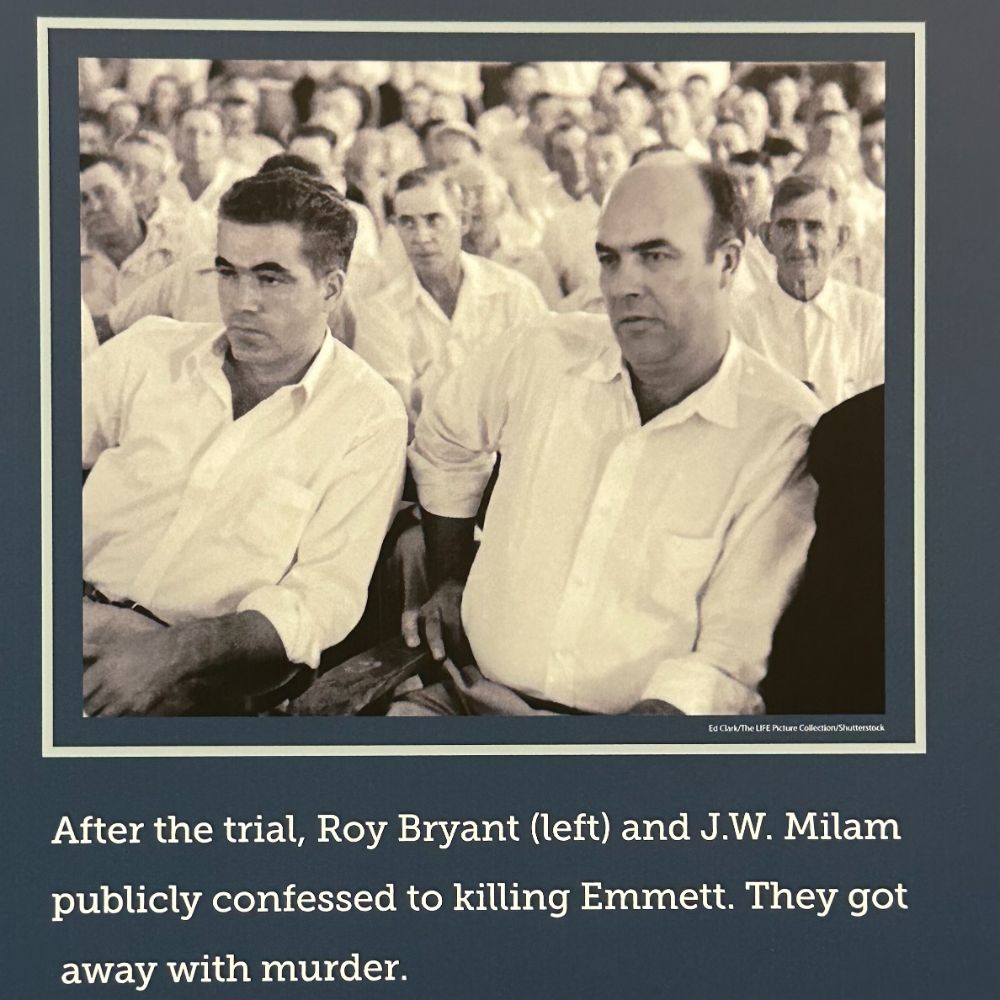
Where Emmett Till was tortured and murdered is a well-kept secret even today. Truth is: “no one wants to know.” The current mayor of Glendora still tries to convince the public it happened in his town because it’s good for tourism. To protect the many others who knew better, it was widely reported he was murdered at Bryant’s Store in Money in Tallahatchie County by Milam and Bryant alone. But in fact, the seed barn, 3 miles from the town of Drew, in Sunflower Co. is the site. An innocent kid’s face was cleaved with a hatchet and knife, his skull split, his eyes burst from their sockets. A single pistol shot to his forehead killed him. As many as 14 people were present taking their turns. Willie Reed, a local sharecropper’s son, was indeed the one who heard a child’s voice crying out from the Barn as he hid at a well close by, where he was drawing water.
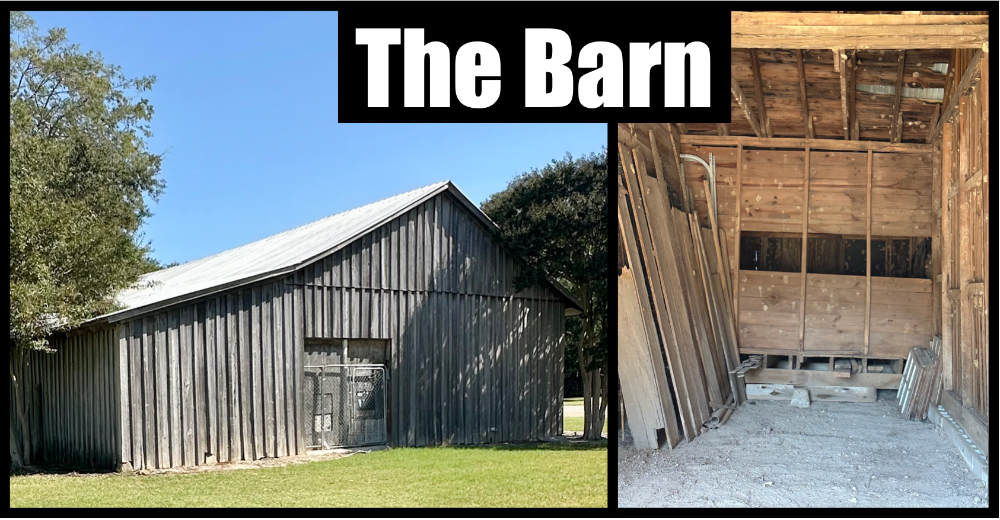
He would testify to hearing a child’s voice pleading:“Lord have mercy! Mama, save me!” Emmett’s mother Mamie couldn’t identify her son except he was still wearing the ring his father had given him. 70 years passed. The first public acknowledgment of murder in the Barn didn’t happen until 2022! Less than 4 years ago. Today, very few folks of the Mississippi Delta, black, white or otherwise, have ever heard of Emmett Till. After all these years, does this story even matter? I will continue my pursuit of this question next time.







Recent Comments