
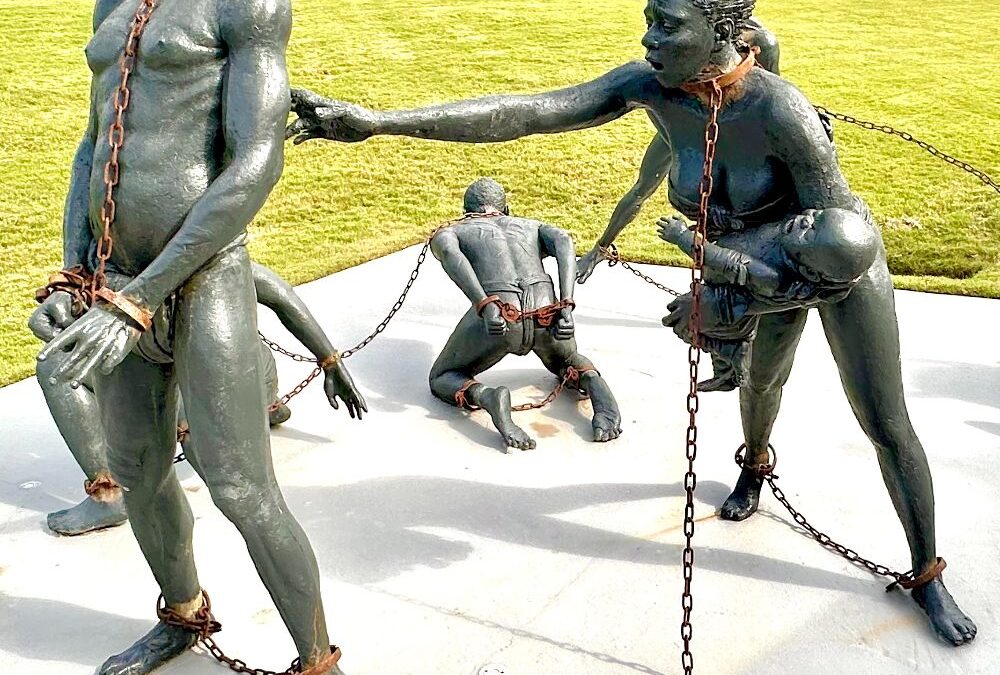
The narrative for slavery in the United States begins in 1619 when 20 Africans arrived in Jamestown. A century before, Portugal and other European nations set their sites on Africa for purchasing slaves. As the need for more slaves increased, so did the kidnappings. During the Trans-Atlantic slave trade, approximately 10-12 million people were forcibly taken from Africa to the New World. Think about this – that number is larger than today’s population of Los Angeles County.
-Legacy Museum, Montgomery, Alabama
The narrative encompassing the forced abduction of 14-year-old Emmett Till, the torture and killing, the infamous mistrial of his murderers, began here in 1619. The story continues as “More than one out of every six black men who today should be between 25 and 54 years old have disappeared from daily life, incarceration and early death the main drivers.” (NAACP) Disappeared from daily life? Why is Emmett Till’s story still relevant? In the first blog I outlined the events of his lynching as we understand it. We toured the sites in the pouring Delta rain one day and took these raw videos. I do mean “raw.” Not your TV documentary stock, but we wanted you to see we were there. First at Bryant’s Grocery and Meat Market. Then to the site of the Moses and Elizabeth Wright house, from where Emmett was abducted, then to the bridge in Glendora where his body was dumped in the Tallahatchie, and finally to Graball Landing where fishermen took him from the river.
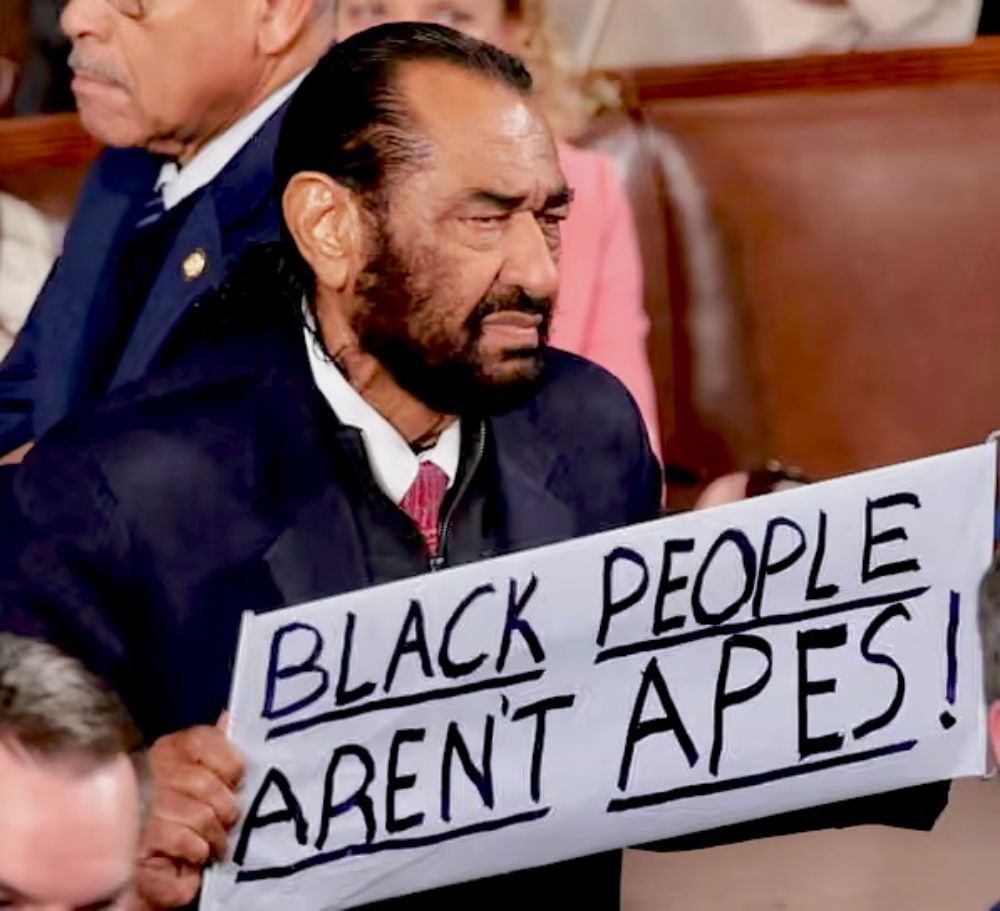
Debbie and I made ourselves watch the 2026 State of the Union address, such as it was. As we came to the end of Black History Month, at least two takeaways from the address seemed significant, even to this old white guy. The first was the image of Congressman Alexander Green representing the 9th district of Texas being escorted from the proceedings holding a sign reading “BLACK PEOPLE AREN’T APES !”, a reference to the image the actual President of our United States sent around showing the heads of Barack and Michelle Obama on the bodies of apes.
The second was another attempt by the speaker to add mythical power to the oft-proposed SAVE AMERICA ACT, which would require Americans to provide proof of U.S. citizenship, such as a passport or original birth certificate, in order to register to vote. More than 150 million Americans don’t have a passport and many more have no access to original birth certificates, including millions of women whose certificate doesn’t include their married surnames. Whose America are we saving? For whatever it’s worth, we are trying very hard to learn how African American history is American history, and tell the story to other white citizens as best we can. We do know how denying black Americans equal representation at the ballot box has gone hand-in-hand with treating them as less than human. In fact voter turn-out among African Americans is still lowest in American counties where lynchings occurred, making plain the intergenerational trauma of lynching in African American communities that will continue until truth and reconciliation become serious sacraments of American culture and practice.
As we read Wright Thompson’s The Barn and the author’s meticulous weaving of the social, economic, political and environmental dynamics that lead to Emmett Till’s violent murder, we kept saying to each other, “This is so like what is happening in our country right now!” On our way back to Oregon we decided to read it again. There were details we never want to forget. For instance, on May 7, 1955, four months before Emmett Till was murdered near Drew, Mississippi, Rev. George W. Lee was shot in the face and killed in nearby Belzoni. He was the first African American registered to vote in Humphreys County since Reconstruction and was organizing to register voters. He was told he’d be killed if he didn’t take his name off the rolls. Memphis banks were withdrawing sharecropper loans if they registered to vote. Lee and many others were part of the strong movement for civil and voting rights in the Delta that included NAACP organizing around Jackson MS where Medgar Evers was assassinated in 1963. And now the racist beat goes on. The Voting Rights Act of 1965 was not repealed by our Supreme Court in 2013, but made significantly weaker. And now we have the SAVE AMERICA ACT, which should be called the “Save WHITE America Act”. And now, in mid-2026, we have a new epidemic of unconstitutional gerrymandering plaguing our democracy. And now we have the Supreme Court ruling (in Louisiana v. Callais) against a Louisiana congressional map that created a second majority-Black district, concluding that the use of race as a dominant factor in drawing the map constituted an unconstitutional racial gerrymander. And now…
The state of our Union 2026 is still, in so many ways, defined by the Lost Cause of White Supremacy. The lynching of Emmett Till was one event that began a great turning. But why? What happened in the early hours of a Sunday morning in August 1955 in a barn in Sunflower county was no different, no more violent than the over 6,500 racial terror lynchings that have taken place in our American history since 1865. Blacks in the Delta called the Tallahatchie, “The Singing River” for the voices of all the murdered souls dumped into its damning waters, singing out for freedom. The Klan claimed to have thrown 116 into the Tallahatchie just in the few years after the Civil War (pg 118). In Montgomery, Alabama we spent six hours at the Enslavement to Incarceration exhibit in the Legacy Museum. One site of three operated by the Equal Justice Initiative, the museum stands on the grounds of former slave warehouses where human beings were shackled and groomed to look good at auction.
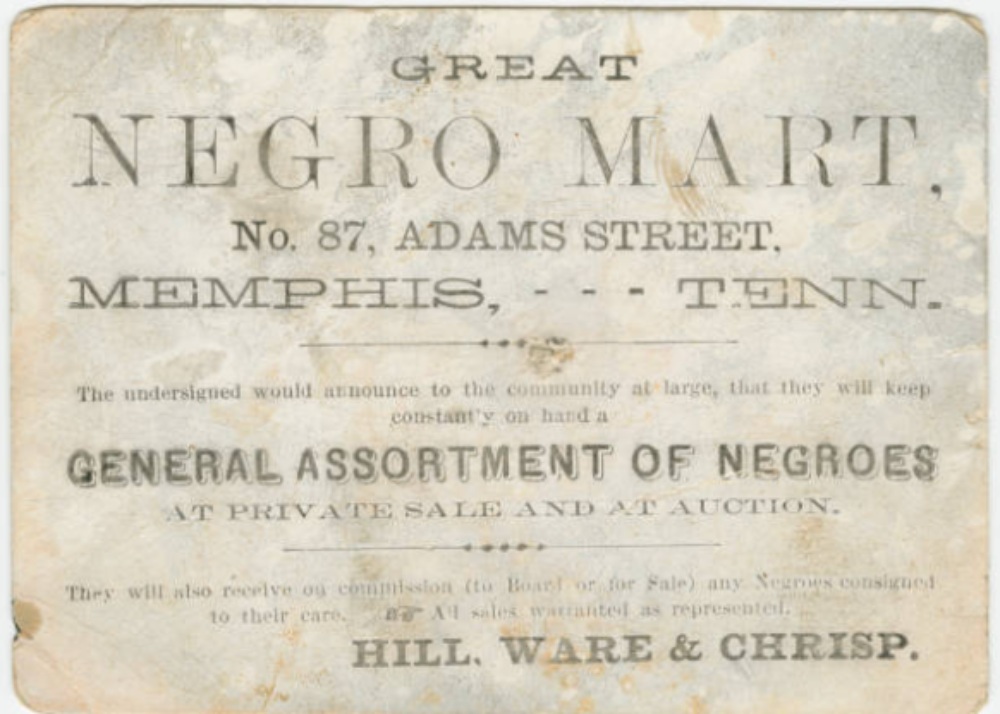
One wall is stacked with jars of soil from lynching sites. Another displays a collage of sales ads for human chattel. There’s even a row of cells where you can sit and “speak” to the hologram of a contemporary black woman or man imprisoned where no one wants to know. In one corner of the museum I stopped to hear the voice of Billie Holiday sing “Strange Fruit.” From 1939, Holiday performed the anti-lynching ballad against great odds. Despite threats, bans by radio stations, and label rejection, she sang on, even in Carnegie Hall, making a powerful civil rights statement until her death in 1959. The haunting lyrics, written by Abel Meerpol, are below:
Southern trees bear a strange fruit,
blood on the leaves and blood at the root,
black body swinging in the Southern breeze,
strange fruit hanging from the poplar trees.Pastoral scene of the gallant South,
the bulging eyes and the twisted mouth,
scent of magnolia, sweet and fresh,
and the sudden smell of burning flesh.Here is a fruit for the crows to pluck,
for the rain to gather, for the wind to suck,
for the sun to rot, for a tree to drop,
here is a strange and bitter crop.Performed by Billie Holiday
Edward B Marks Music Company US copyright © 1939 All rights reserved.
As you listen to the words “the bulging eyes and the twisted mouth, scent of magnolia, sweet and fresh, and the sudden smell of burning flesh,” the exhibit invites you to watch black and white photos of lynchings. The lynchings were often advertised ahead in local papers, and 10,000 plus white people, including many families with young children, would bring their picnic lunches after church on a Sunday afternoon. These were acts of worship, evangelical faith, and holy entertainment. As white Christian clergy, this is a gut shredding reminder that what we call ourselves really doesn’t mean holy crap. Nor does what we say we believe, what our church buildings look like, or what our church signs announce. It’s what we do, how we live, who we show up for that matters. Being Christian doesn’t mean a thing without proof. Not one thing.
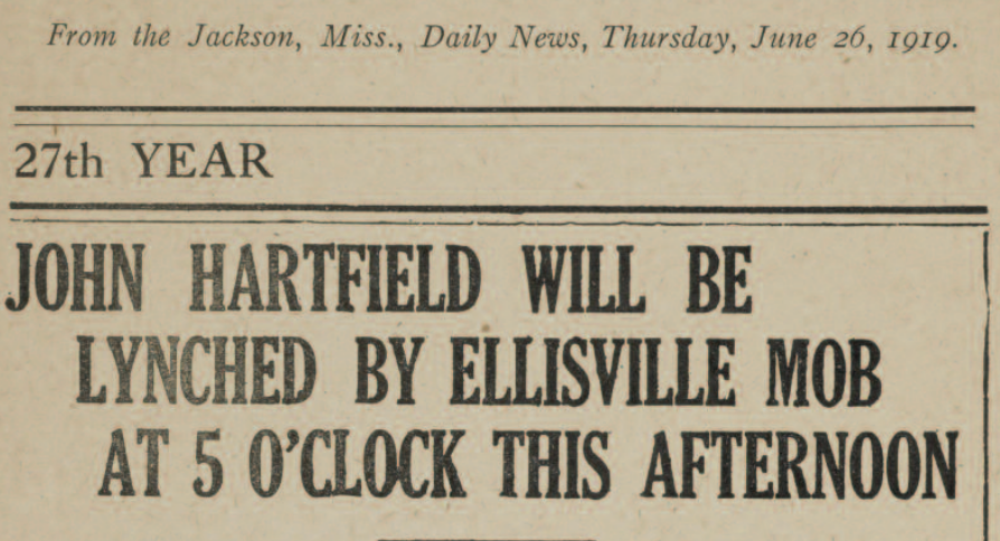
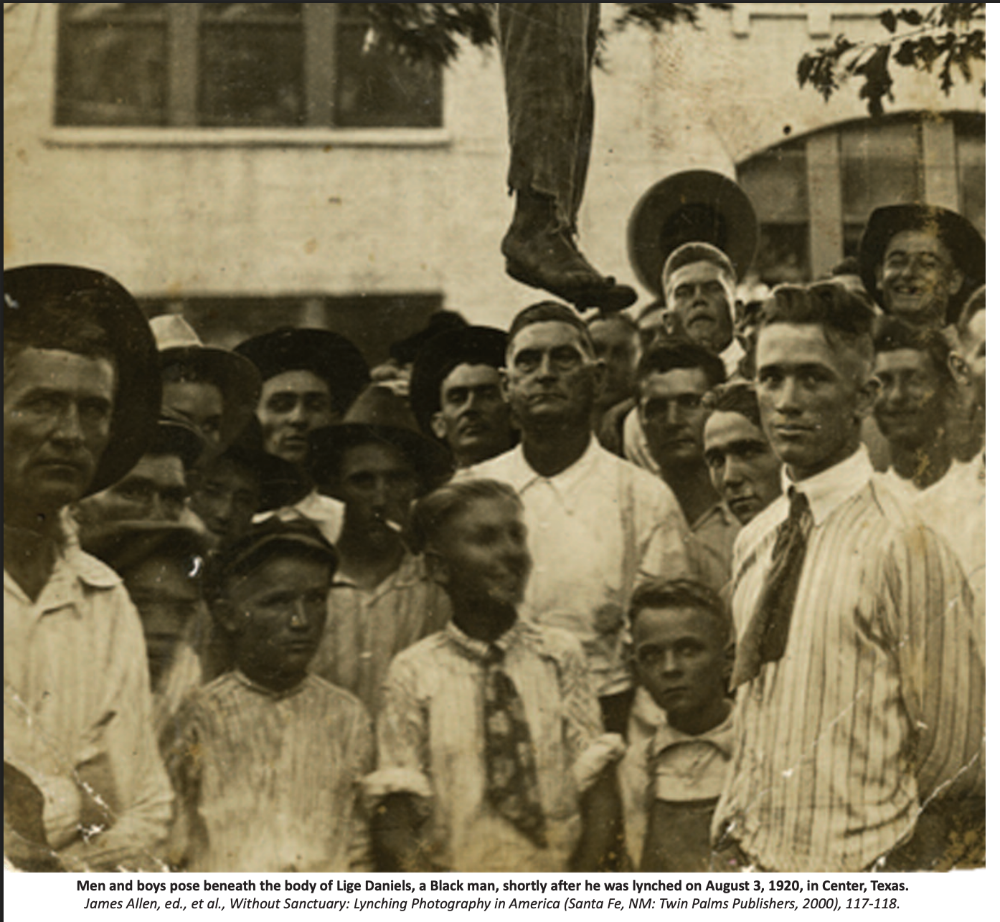
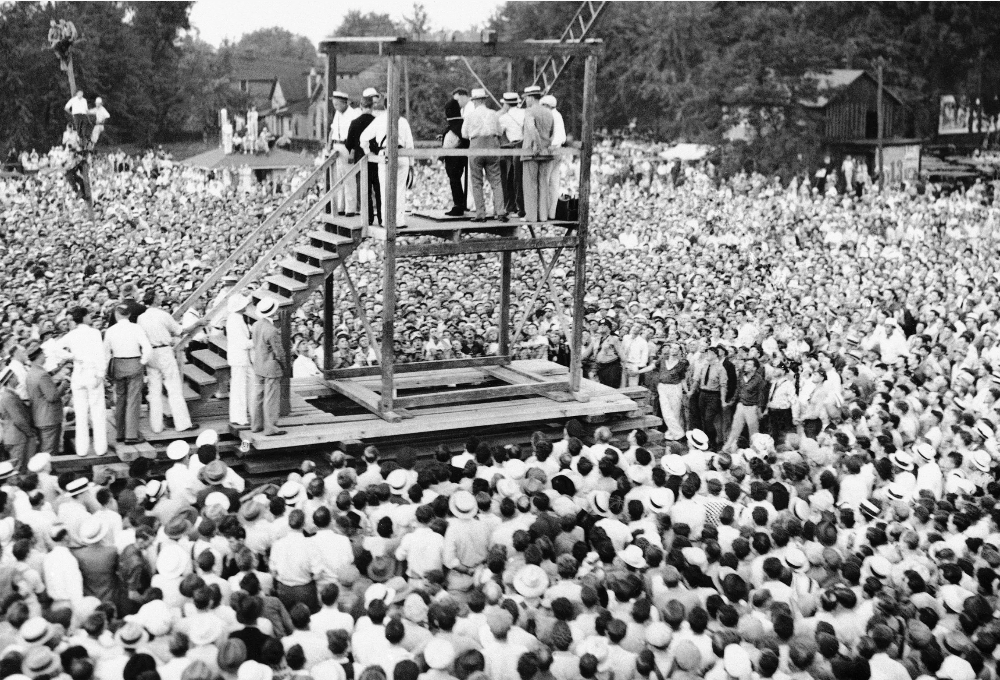
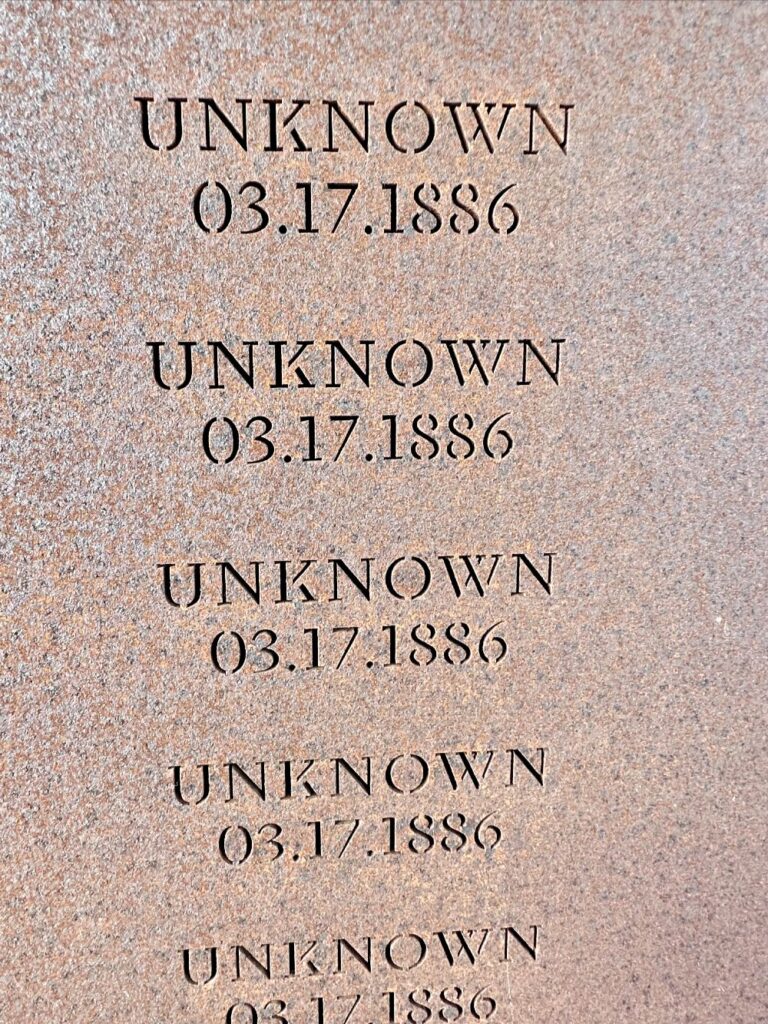
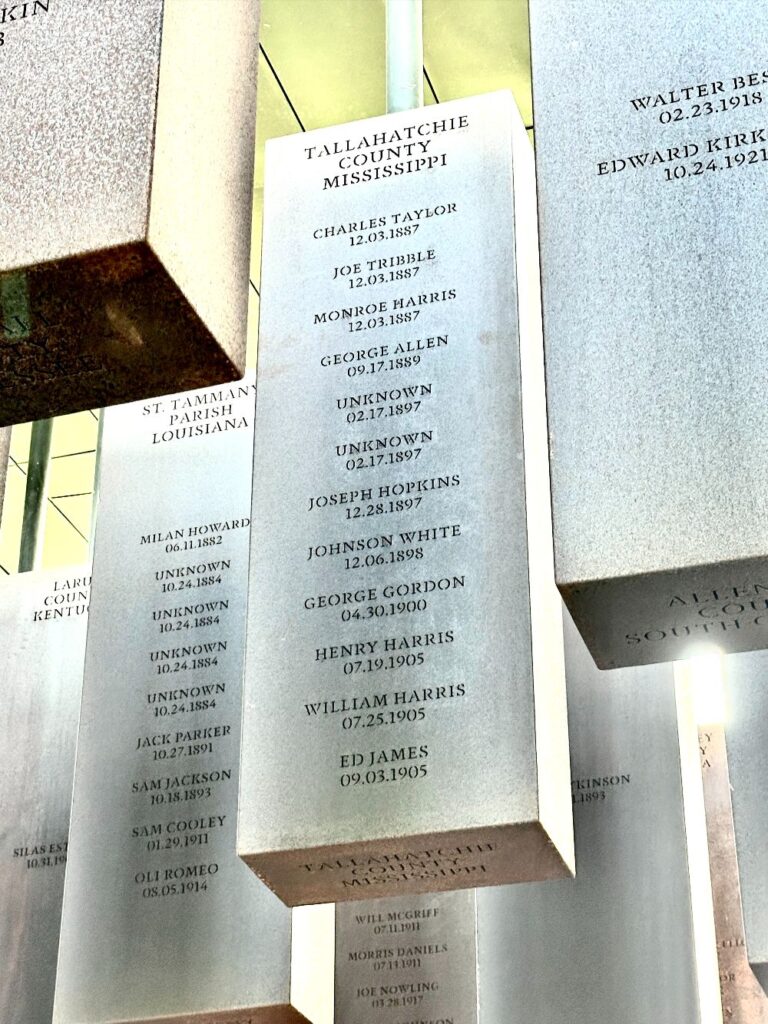
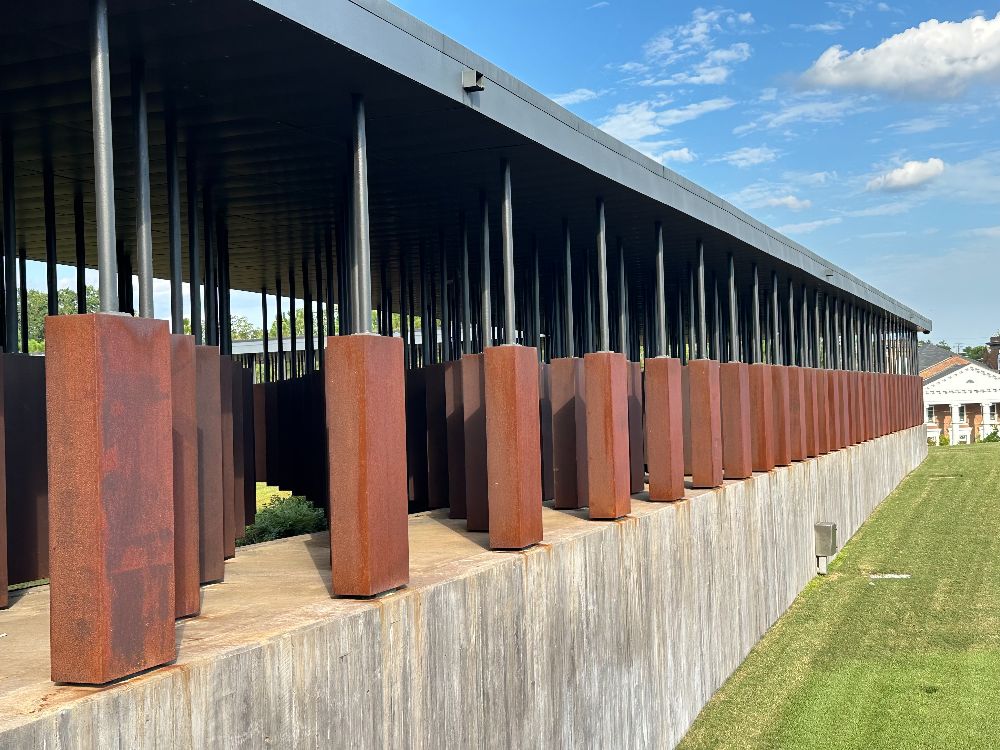
Across town, the lynching memorial at the National Memorial for Peace and Justice evokes the image of hanging bodies with 805 steel columns, suspended from the ceiling, each representing a U.S. county where at least one person died of a spectacle lynching. Names, dates, and places etched in steel, tell the story of our human brothers and sisters swung from trees while the white community watched. Many are listed UNKNOWN. How was the lynching of Emmett Till any different from 6,500 others? Maybe because his Mother refused to let it be UNKNOWN.
We walked the graves by what’s left of the East Money Church of God in Christ. In the days after Emmett’s body was removed from the Tallahatchie at Graball Landing, Sheriff Henry Clarence Strider went to work making sure the tortured corpse could be buried quickly and forgotten. A grave was dug. The hearse carrying Emmett’s casket was parked on the gravel road by the church yard. Just moments before the brutal evidence was to be covered in red Delta soil, a deputy sheriff delivered the message that Emmett’s mother wanted his body home in Chicago. The county reluctantly agreed to ship it if the family signed a court order that the casket would be sealed and never opened. They signed.
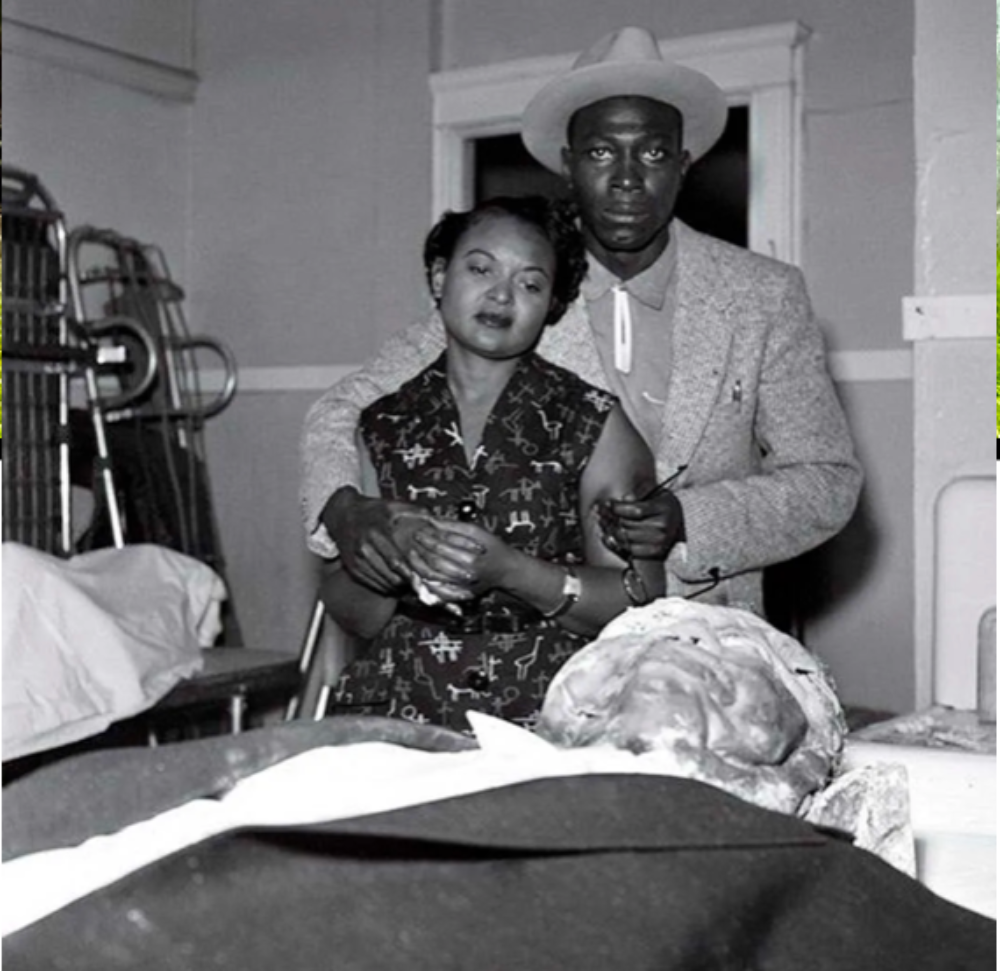
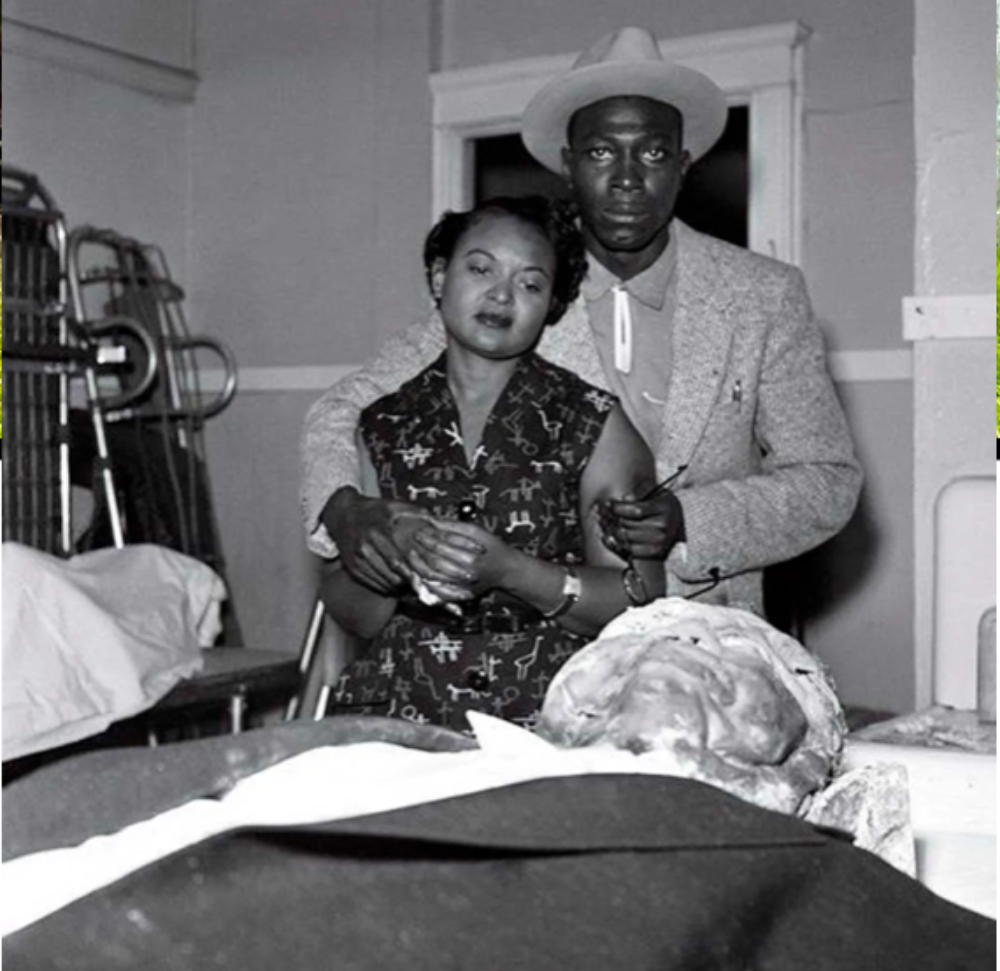
Emmett’s casket was put on the train called “The City of New Orleans,” bound for Chicago. Mamie Till would have nothing to do with a sealed casket. Defying the Mississippi court, they opened the lid in Chicago so Mamie could see. The photo shows her and soon-to-be husband Gene Mobley viewing Emmett’s body. She told the undertaker they would open the casket for the funeral. Asked if she wanted them to make his body more presentable, she replied, “No. Let the world see what I’ve seen.”
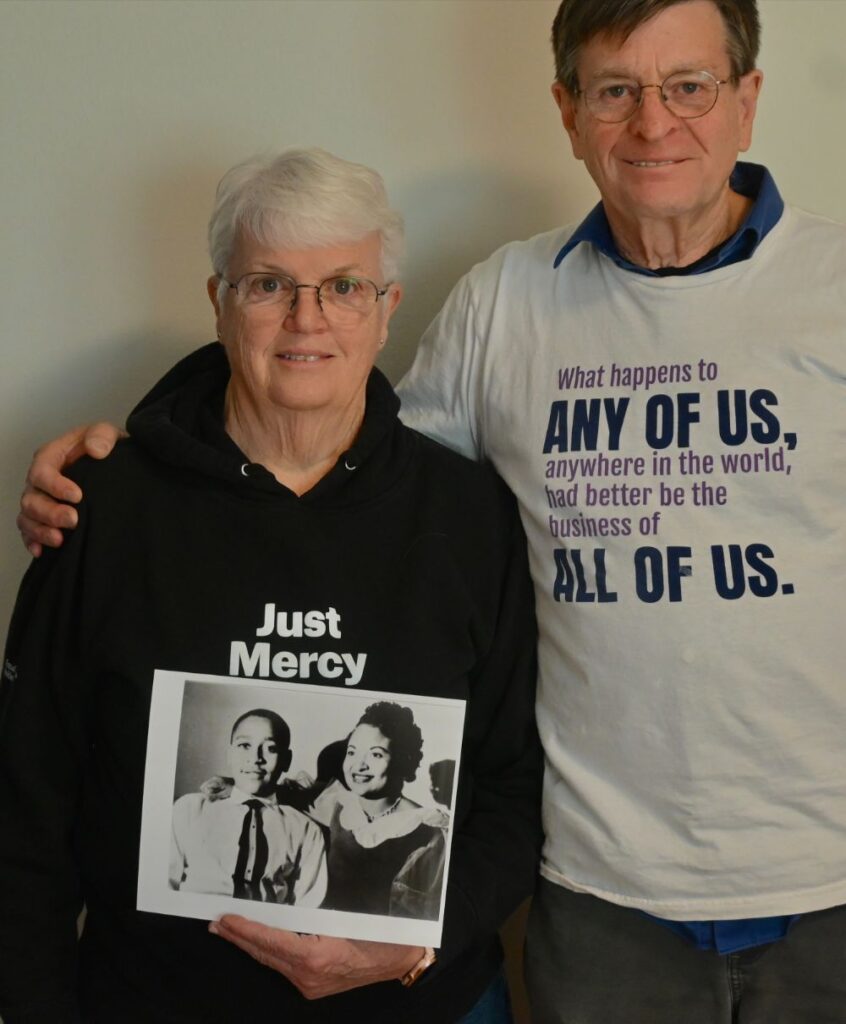
At the funeral in Roberts Temple Church of God in Christ, at least 100,000 people filed by the casket to see what she saw. In the month following her son’s funeral, Emmett’s mother traveled to 33 cities in 19 states telling her story. The lynching of Emmett Till ignited the Civil Rights movement because Mamie Till-Mobley had the courage to tell the whole truth. In fact she would say she too was transformed. Before her son’s death, she admitted that, when she heard of injustices happening to others in the South, she would think, “That’s their business, not mine.” The tragedy taught her that apathy is a luxury no one can afford. She often repeated the words the have become a sacred calling for so many of us in these times. “The murder of my son shows me that:
“What happens to any of us anywhere in the world had better be the business of all of us.”
Only three months after Till’s death, Rosa Parks was arrested for refusing to give up her seat on the bus to a white person, touching off the Montgomery Bus Boycott. She would say she thought of Emmett Till that day. His story gave her the courage to stay in that seat and not go to the back of the bus, ever again.
And here we are today: children of color are stolen from their homes and families disappear. White people, still wrapped in the
the Confederate flag and States rights are easy targets for the rhetoric of the still Lost Cause. Whipped into believing racist lies, afraid of losing the Old Kentucky Home, books are banned and free speech condemned. Lynch mobs of poor whites invade our halls of power to do the dirty work for the 1%. White supremacy threatens to rule the day as the present Cabinet operates more like a minstrel show than a democracy with Jesus as the Grand Interlocutor chiding Vice President Tambo and Defense Secretary Mr. Bones to do his bidding. While all MAGAdom dawns its mask to dance around a burning cross, their superhero, Jim Crow raises his glass to the Good Ole Days. This is not a show we can afford to miss. We must keep showing up looking like ourselves.
Because of the Mamie Till Mobleys of the world, the Billie Holidays, the Rev. George Lees and millions of women and men before and since, we know we don’t have to take this shit. We are re-learning the true American narrative with its pain, violence and the struggles for love, justice and another great turning. We are rewriting and reshaping. We know how to show up for the truth. We are showing up by the millions to exhume that truth from the sealed tombs of flawed history against all odds. No such thing as a sealed casket. We are simply and courageously “letting the world see what we see” and we are doing it together. In fact even old white people can still learn, can speak the truth…and we keep trying.






thanks friend for your words and videos and presence in this world